

Your Mid-Year Fitness Reset: What to Keep, What to Drop, and What to Start

Have you caught yourself thinking:

"I'll get serious again after summer."
Maybe January started with good intentions.
You bought healthier groceries.
You exercised more consistently.
You told yourself this would finally be the year things felt different.
But now it's June.
Life got busy.
Work got stressful.
Schedules changed.
Vacations happened.
And suddenly it feels like you're behind again.
If that's where you are right now, you're not alone.
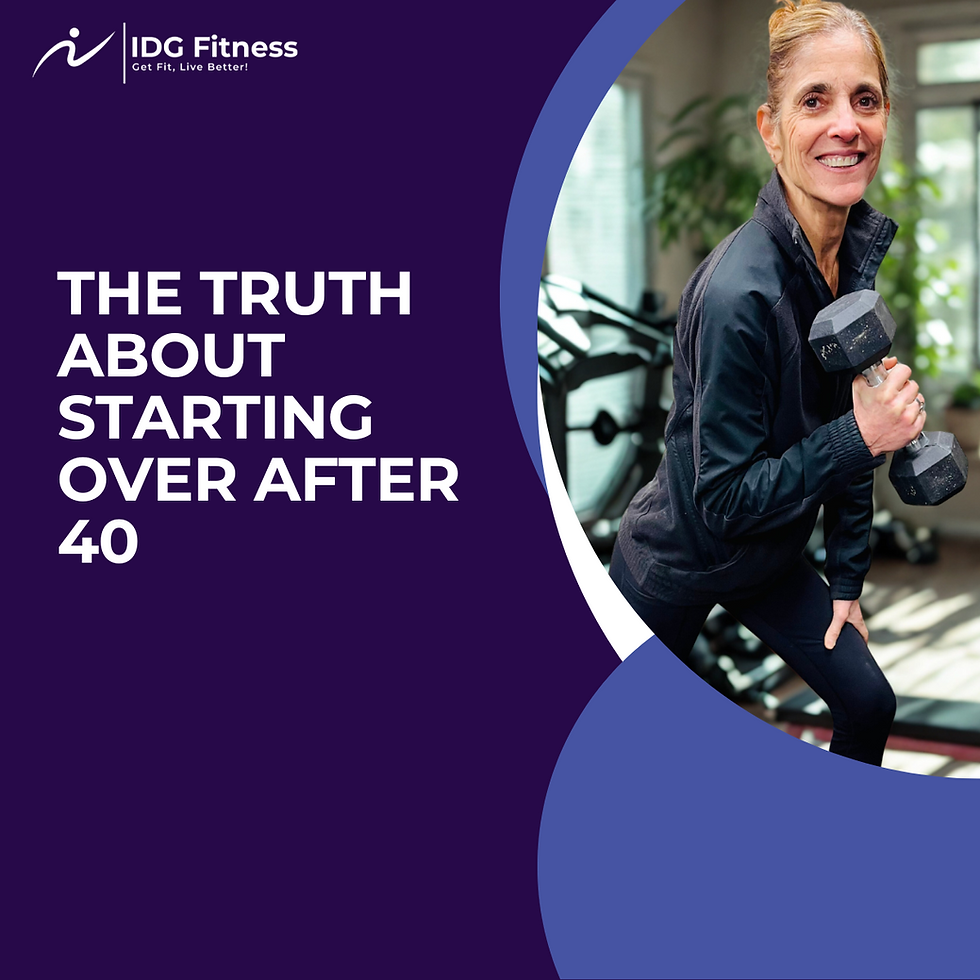
More importantly, you don't need to start over.
“This isn’t a motivation problem — it’s a strategy mismatch for this stage of life.”
Many women over 40 assume a mid-year reset means creating a completely new plan.
But the most effective reset usually isn't about doing more.
It's about removing what isn't working.
The Real Purpose of a Mid-Year Reset
When life gets busy, most women naturally accumulate fitness expectations.
Maybe you're trying to:
Follow a complicated meal plan
Exercise five days per week
Track every calorie
Walk daily
Drink more water
Improve sleep
Reduce stress
Stay consistent through vacations
None of these goals are bad.
The problem is trying to improve everything at once.
As stress increases, your available energy decreases.
Your recovery capacity changes.
Your schedule becomes less predictable.
And suddenly the plan that seemed manageable in January feels impossible in June.
This is often where consistency begins to break down.
Not because you've failed.
But because the plan no longer fits your current reality.
Why Simpler Usually Works Better After 40
One of the biggest mistakes women make during a reset is adding more.
More rules.
More restrictions.
More workouts.
More pressure.
But lasting consistency usually comes from subtraction.
The women who stay consistent year-round often do something different.
They regularly evaluate what's actually helping them.
Then they keep the habits that create results and remove the habits that create stress.
Instead of asking:
"What else should I be doing?"
They ask:
"What's making this harder than it needs to be?"
That shift changes everything.
Because fitness becomes easier to sustain when it fits your life instead of competing with it.
What to Keep
The habits worth keeping are usually the ones you can maintain even during busy weeks.
Not perfect weeks.
Real weeks.
The walk you actually take.
The strength workout you consistently complete.
The breakfast that keeps your energy steady.
The bedtime routine that helps you sleep better.
These habits may seem small.
But they're often doing more for your long-term success than the complicated plans you abandon after two weeks.
The goal isn't finding the perfect system.
The goal is identifying what's already working and protecting it.
What to Drop
Many women carry unnecessary fitness pressure.
The belief that every workout must be intense.
The idea that one vacation ruins progress.
The expectation that consistency means perfection.
These beliefs create guilt.
And guilt rarely creates lasting motivation.
If a habit consistently leaves you feeling overwhelmed, frustrated, or defeated, it may not belong in your current season of life.
A mid-year reset is an opportunity to let go of expectations that no longer serve you.
Not because you're lowering your standards.
Because you're creating a strategy you can actually sustain.
What to Start
Instead of starting over, start smaller.
Choose one habit that feels achievable right now.
Not when work slows down.
Not after summer.
Not when life becomes easier.
Right now.
Maybe that's:
A 10-minute walk most days
Two strength workouts each week
Protein at breakfast
Going to bed 30 minutes earlier
The specific habit matters less than your ability to repeat it consistently.
Because consistency builds momentum.
And momentum creates confidence.
When women begin seeing themselves as someone who follows through—even in small ways—everything starts to change.
The Mid-Year Reset That Actually Works
The most successful resets aren't dramatic.
They're honest.
They acknowledge your current reality.
They respect your available time and energy.
They focus on sustainability instead of intensity.
And they help you move forward without feeling like you need to erase the last six months and start from scratch.
If the first half of the year didn't go exactly as planned, that's okay.
You don't need a fresh start.
You need a better fit.
Keep what's helping.
Drop what's creating unnecessary pressure.
Start with one simple action you can repeat.
That's often all it takes to regain momentum.
And momentum—not perfection—is what creates lasting results.


Comments