

Why Tiny Fitness Habits Work Better Than Waiting to Feel Motivated

Some days, you fully intend to work out.
You tell yourself this will be the week you finally “get back on track.”
You’ll meal prep. Walk more. Stay consistent. Drink more water. Maybe even start over completely.
But then life happens.
Work runs late.
Your energy crashes by 3 p.m.
Someone needs something from you.
You feel mentally exhausted before the evening even starts.
So the workout never happens.
And after a while, it starts to feel like the problem must be you.
Like maybe you just aren’t motivated enough anymore.
But here’s what most women over 40 don’t realize:
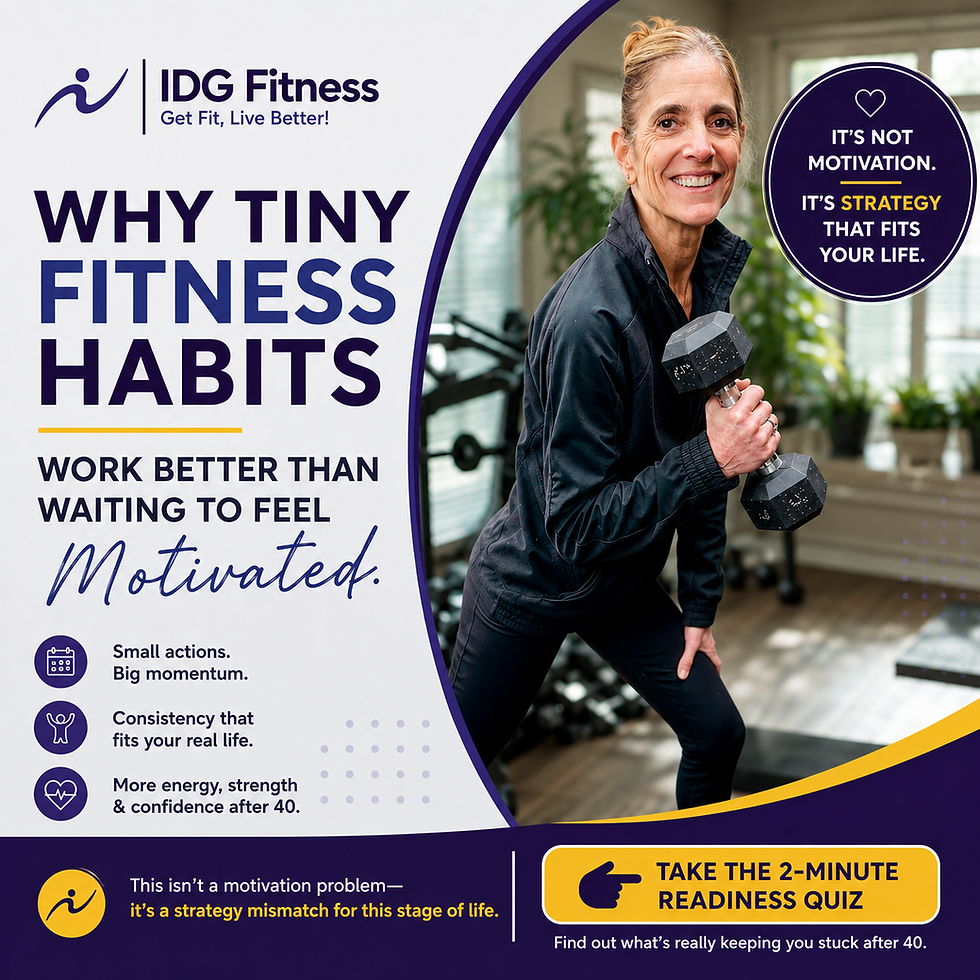
“This isn’t a motivation problem — it’s a strategy mismatch for this stage of life.”
Because motivation is unreliable when your life already demands so much from you.
And the more stressed, overwhelmed, or mentally overloaded you are, the harder it becomes to rely on “feeling ready” before taking action.
Why Motivation Feels Harder After 40
After 40, your energy bandwidth changes.
You may still be capable of doing hard things. But your nervous system, recovery window, stress load, and daily responsibilities all affect how much extra effort you realistically have available each day.
And when fitness starts feeling like one more exhausting thing to manage, consistency becomes harder.
This is where most women get stuck.
They think they need to:
feel more motivated
find more discipline
push harder
start fresh on Monday
But in reality, what usually helps most is making fitness feel easier to begin.
Because momentum is often created after action — not before it.
Why Tiny Habits Work Better
A tiny habit lowers the pressure enough that your brain stops resisting it.
Instead of trying to overhaul your entire routine, you start with something small enough to repeat consistently.
Maybe that means:
a 10-minute walk after dinner
stretching for 5 minutes before bed
preparing breakfast the night before
doing one short workout instead of committing to an hour
Small habits may not feel dramatic in the moment. But they create something much more important:
proof that you can keep showing up.
And that matters more than intensity.
When women get caught in the “all-or-nothing” cycle, they often spend more time restarting than progressing.
They wait until they feel motivated enough to do everything perfectly.
But motivation is heavily affected by stress, sleep, recovery, hormones, workload, and mental exhaustion.
Tiny habits work because they respect real life.
They work with your current season instead of demanding that you become a completely different person overnight.
And once a small habit feels normal, it becomes easier to build from there.
That’s how sustainable consistency actually happens.
Not through pressure.
Not through guilt.
Not through extremes.
But through actions that feel manageable enough to continue even on busy weeks.
What Most Women Get Wrong
One of the biggest mindset shifts after 40 is realizing that consistency doesn’t have to look perfect to still count.
A shorter workout still counts.
A walk still counts.
Choosing a simple meal instead of takeout still counts.
Going to bed earlier still counts.
These small decisions create stability — especially during stressful seasons of life.
And stability is what helps rebuild energy, confidence, and momentum over time.
This is also why overly aggressive plans tend to backfire.
They often require energy, time, and recovery capacity that busy women simply don’t have consistently available.
So instead of helping you feel successful, they leave you feeling behind whenever life gets messy again.
Start Smaller Than You Think
Tiny habits remove the emotional weight from fitness.
They make it easier to stay connected to your goals without feeling overwhelmed by them.
And over time, those repeated small actions become part of your identity.
You stop trying to “start over.”
You simply continue.
That shift is powerful.
Because once fitness stops feeling like punishment or pressure, it becomes much easier to stay consistent in a way that actually supports your life.
Not competes with it.
If you’ve been waiting to feel more motivated before taking care of yourself, maybe the answer isn’t more motivation at all.
Maybe the answer is making the next step:
smaller
simpler
more repeatable
Because tiny habits may seem insignificant at first — but they’re often what rebuild momentum when life feels overwhelming.


Comments